Connecting brands and creators with a decentralized social media marketing platform for iOS
Anonymous Agent is a dual-sided marketplace app where merchants publish marketing campaigns and creators discover, apply for, and fulfill those contracts directly within the product. The app removes the agency layer that traditionally sits between brands and influencers, replacing brokered negotiations with a self-service workflow that handles contract terms, applicant review, deliverable submission, and payment release inside a single interface.
I was hired to work on the end-to-end UX design, from user research and information architecture through interaction design, visual design, and the construction of a scalable component library.
Infrastructure for influencer marketing was built for top of market
The existing landscape of influencer marketing tooling had been engineered around managed-service platforms and enterprise campaign software, both of which assumed substantial marketing budgets and dedicated brand teams. For smaller merchants and emerging creators, that infrastructure remained financially and procedurally inaccessible. Most participants defaulted to direct outreach over Instagram or email, which produced inconsistent terms, no shared system of record, and no enforcement mechanism for payment.
Compressing operational complexity into a self-serve product
The lifecycle of an influencer-merchant partnership (discovery, negotiation, agreement, tracking, submission, approval) was often conducted across channels like DMs, email threads, screenshots, spreadsheets, etc. There was no canonical record either side could refer to on context, no shared source of truth connecting one stage to the next, and both sides absorbed the cost of reconstructing the partnership by hand each time it advanced.
The design problem was to construct a structured environment that held the partnership as a single object, with each stage of the lifecycle anchored to it and visible to both sides. That structure had to be substantive enough to replace the coordination methods participants were already using, but had to avoid imposing the procedural overhead of enterprise tools.
Mapping two parallel journeys onto one product surface
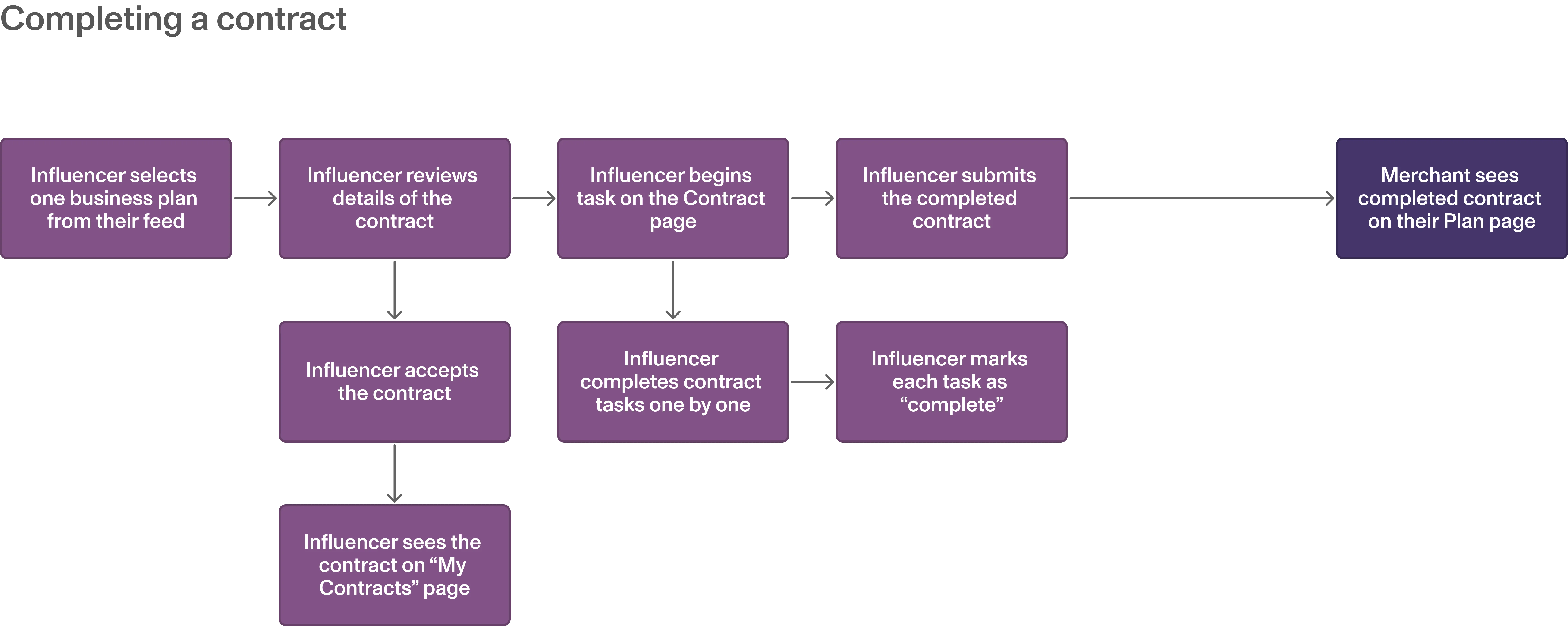
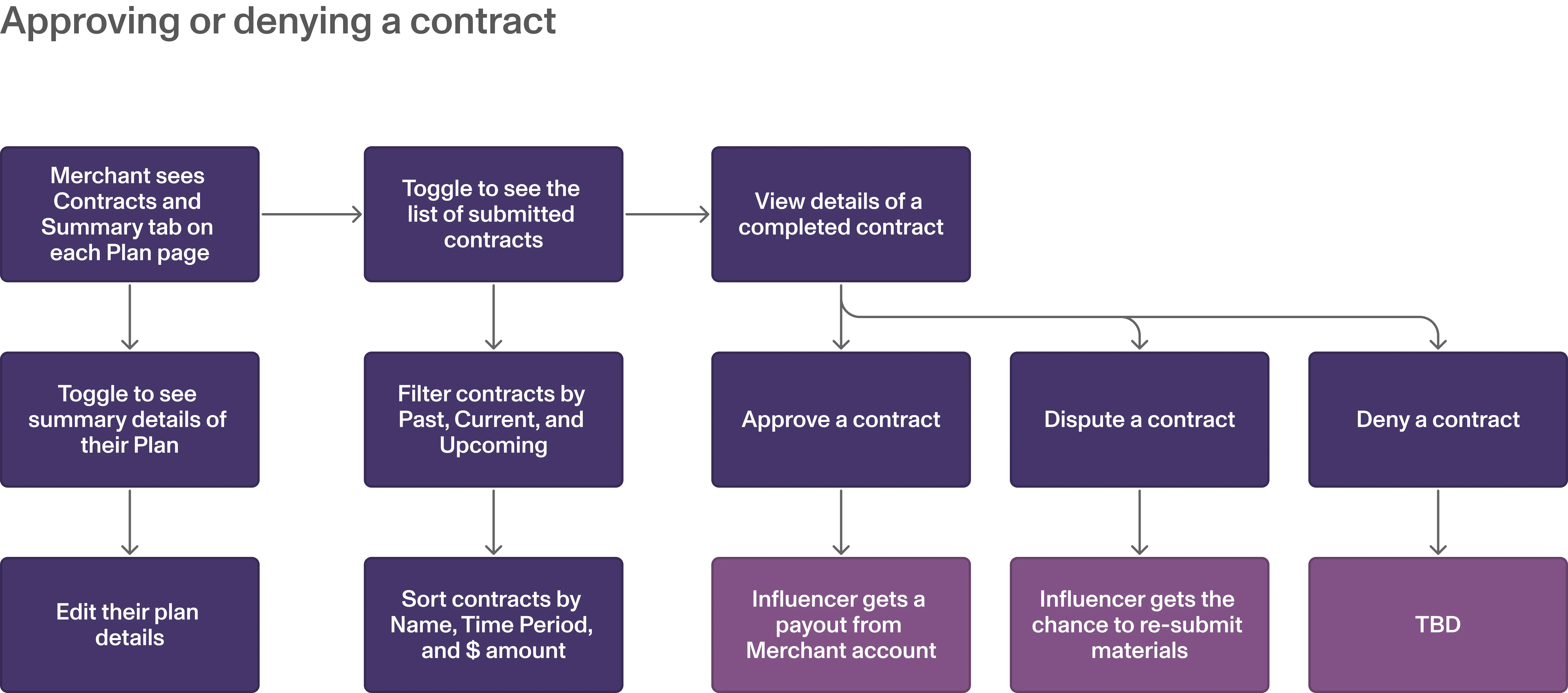
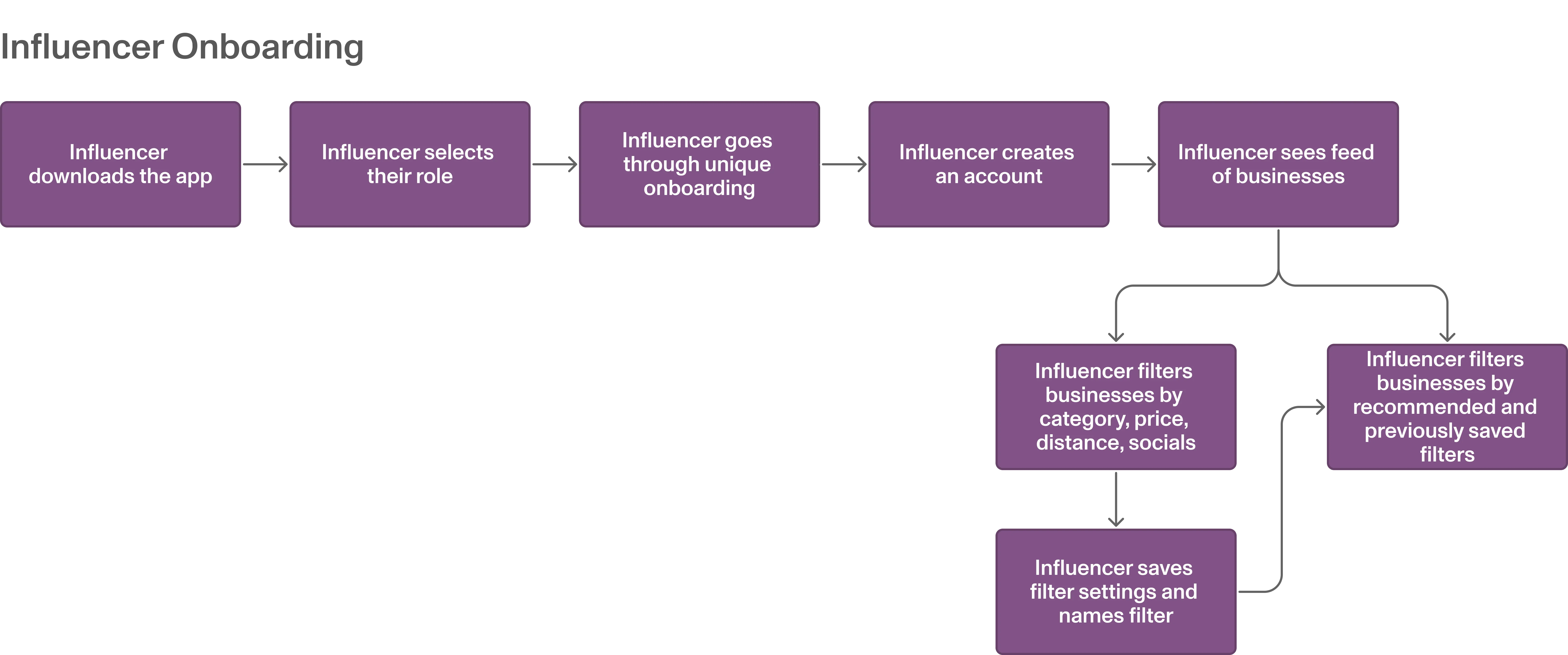
I mapped both user journeys as paired swimlanes, tracing user actions, system responses, edge cases, and error states across every stage of the partnership lifecycle. Working through both journeys at this level of granularity surfaced the core contact points, moments where edge cases on one side cascaded into errors on the other, and the overall rhythm each role would experience as they moved through the product.
How might we design a continuous partnership environment with coordination and trust?
The work of running a partnership is mostly the work of staying coordinated through it: knowing what has been agreed to and what's supposed to happen next. Reconstructing coordination from scratch at every stage creates friction within the relationship, compounded by miscommunication or missed deadlines. The design challenge was to build an environment where coordination accumulates across every stage, creating a shared record.
Building the dual-sided experience based on divergent workflows, mental models, and interaction patterns
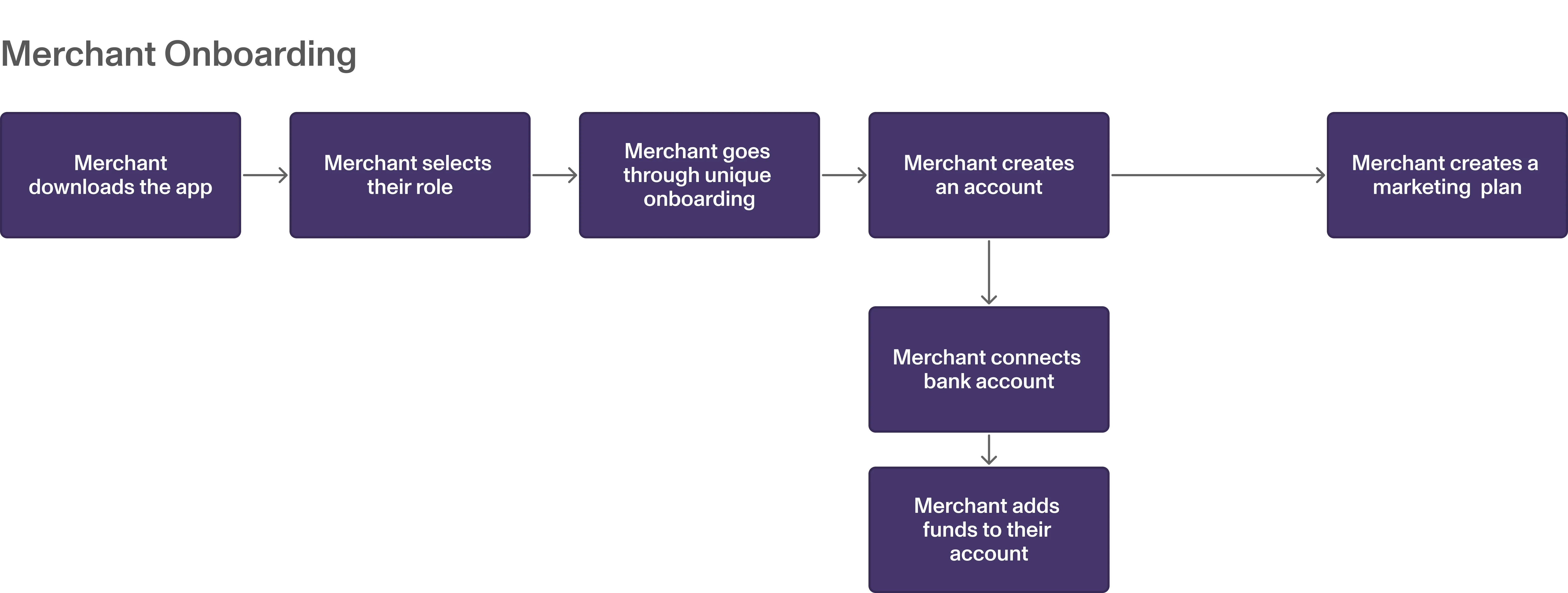
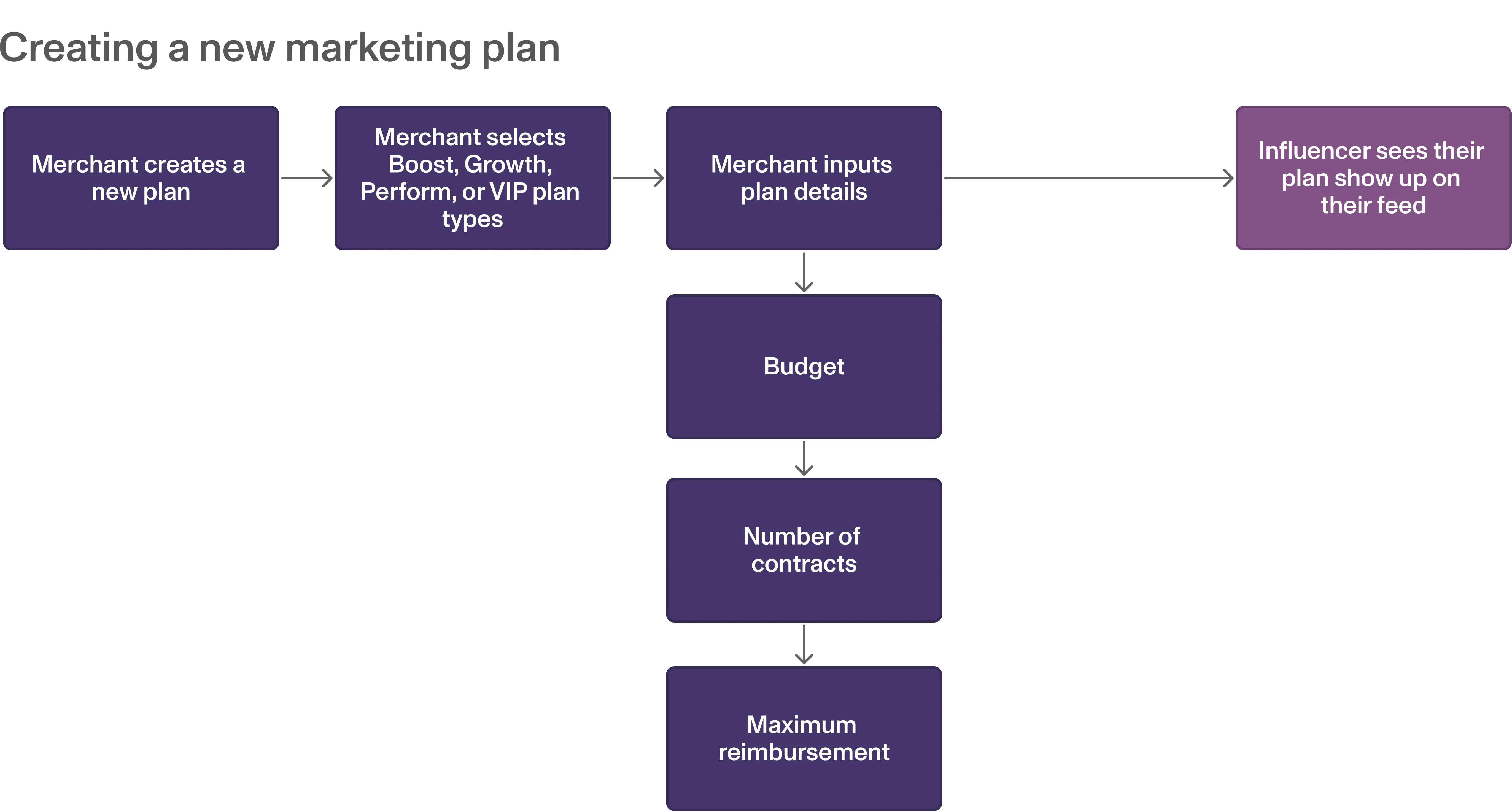
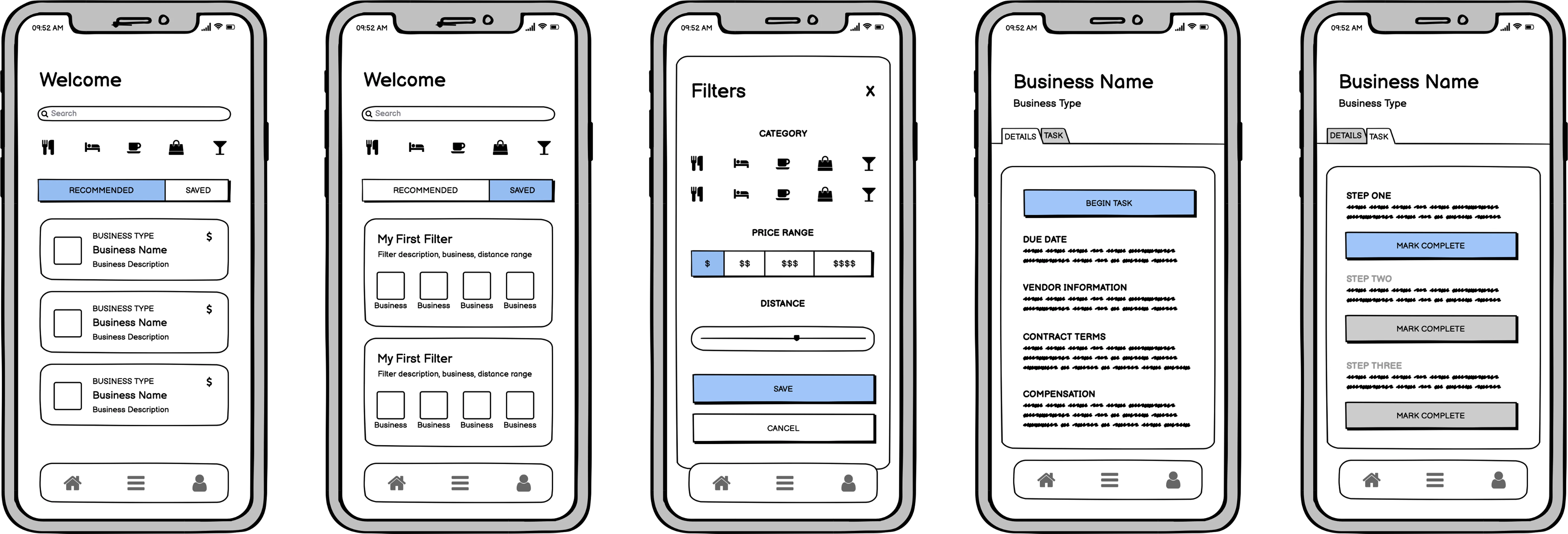
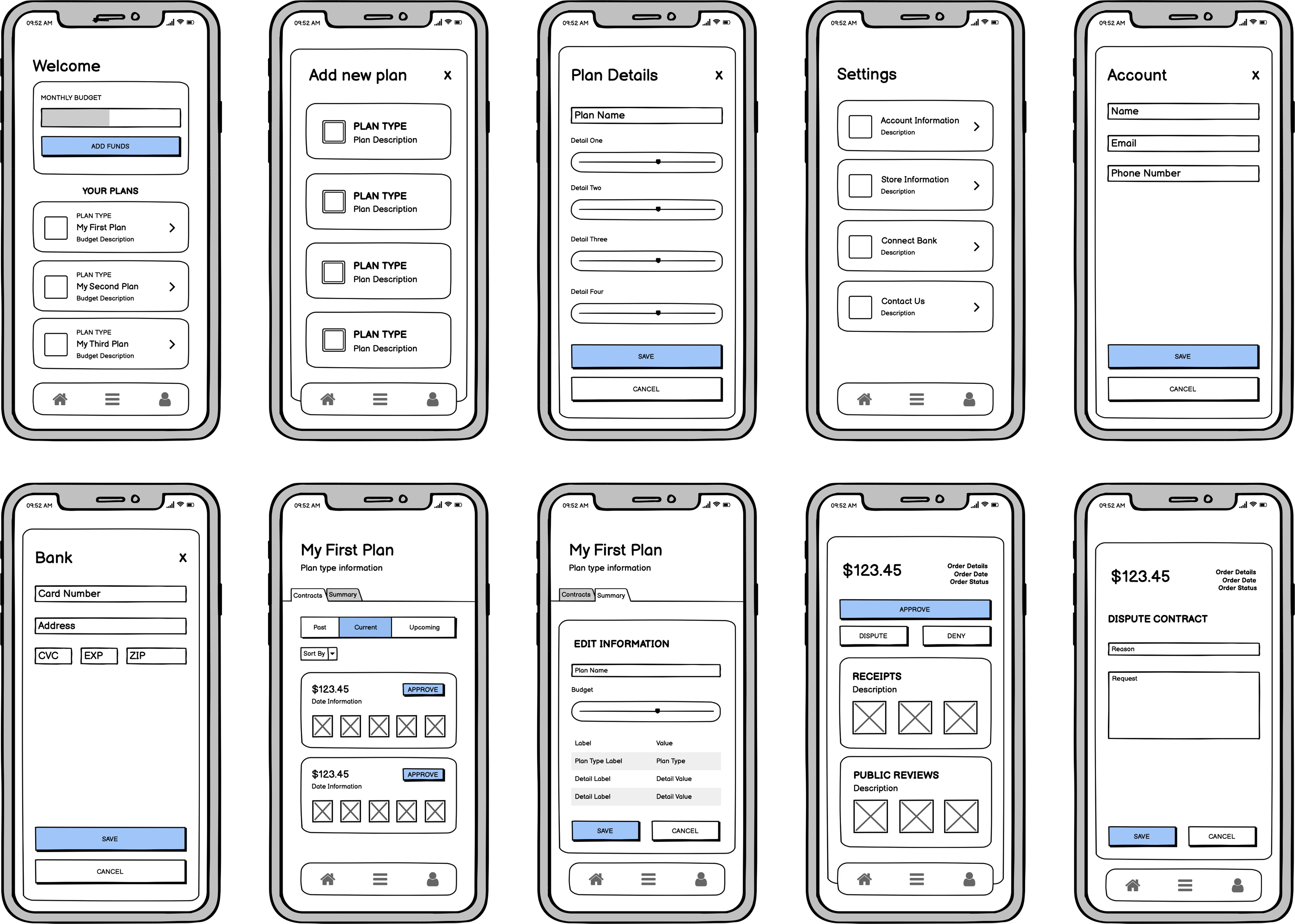
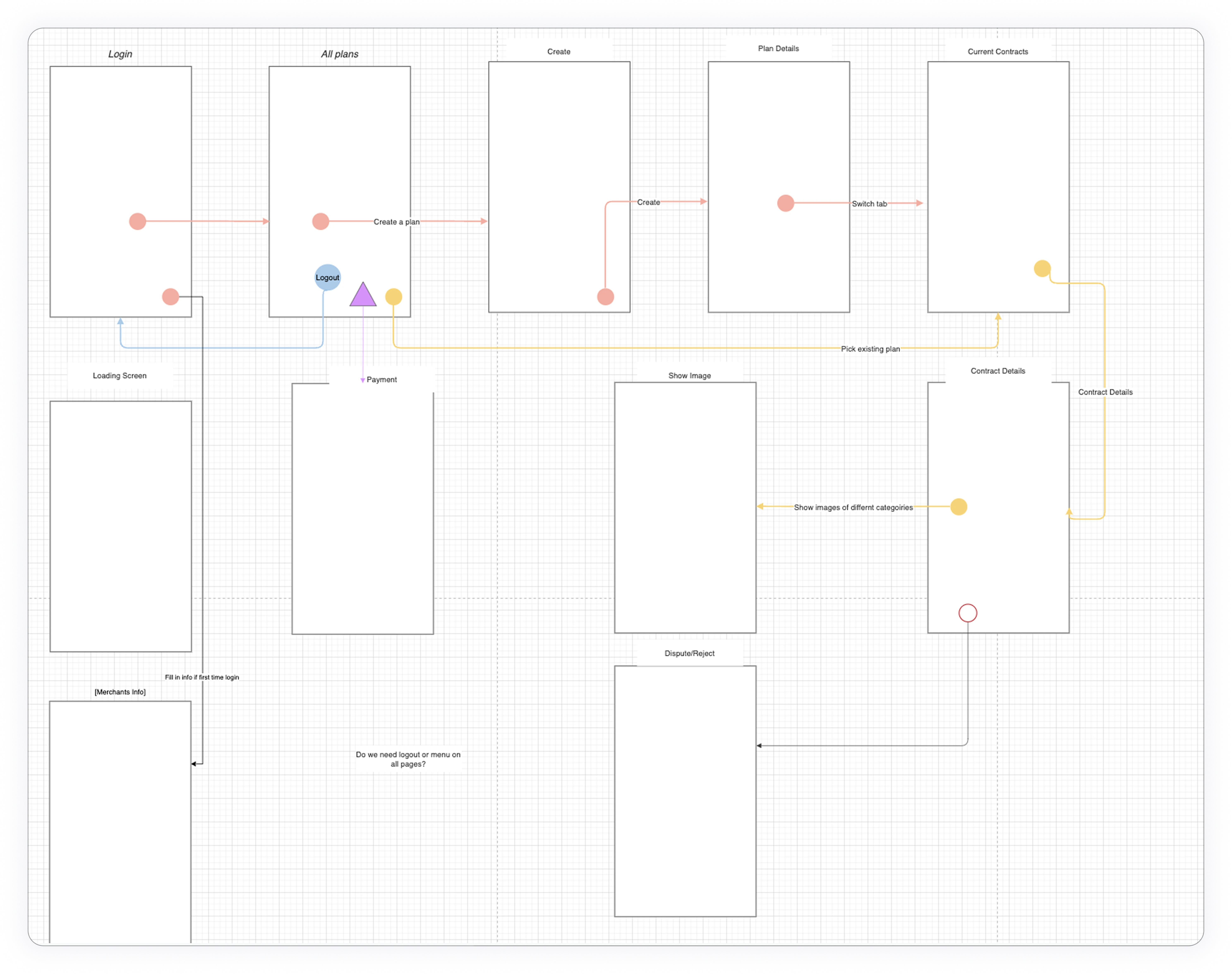
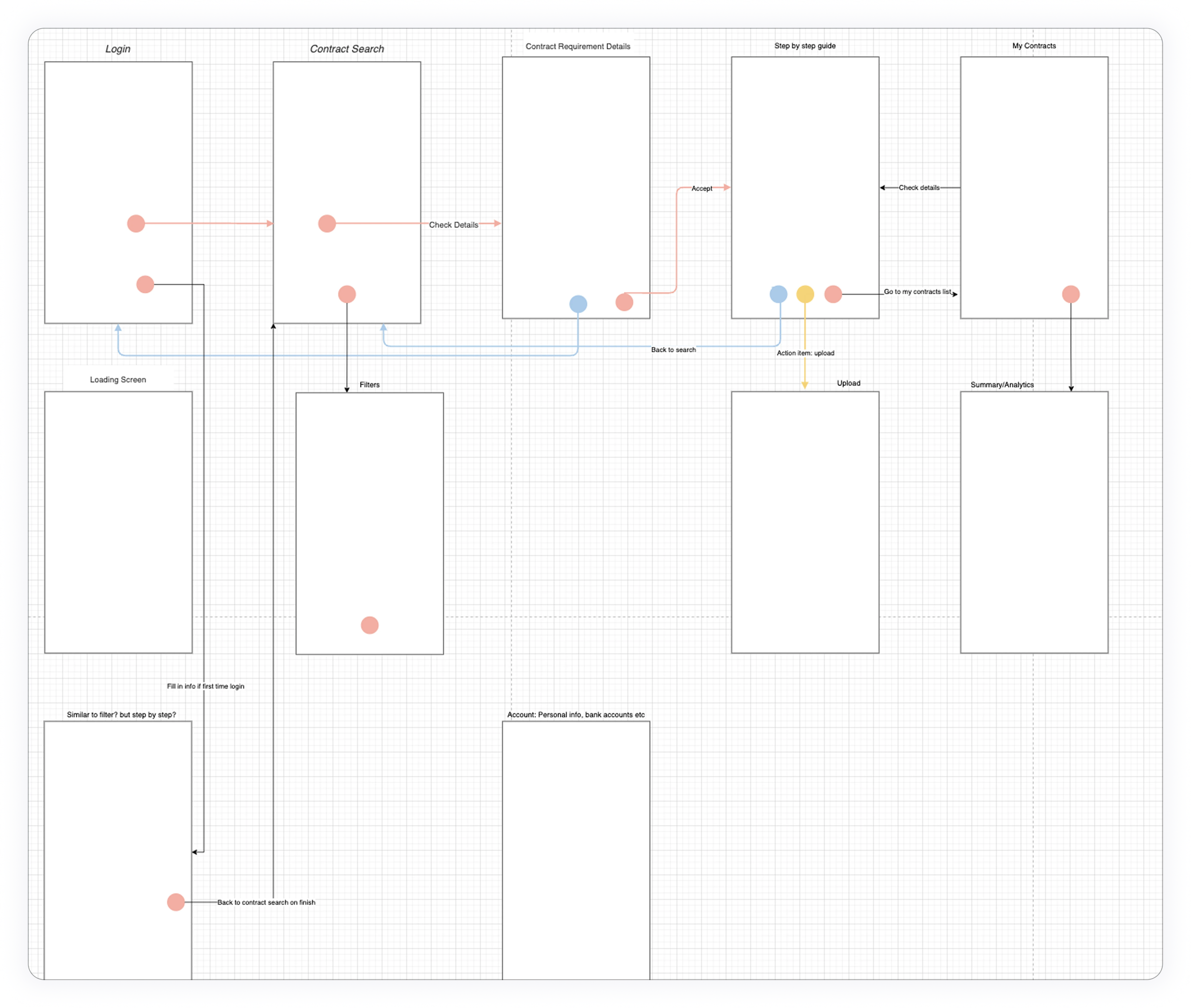
Working through the architecture meant moving between flow diagrams, low-fidelity wireframes, and structural exploration — testing how onboarding, marketing-plan creation, contract approval, and contract completion would fit together for the merchant, while in parallel mapping how discovery, application, contract acceptance, and submission would fit together for the creator.
Financial impact is visible during campaign creation
Campaign creation is the most consequential financial action a merchant takes inside the app, since publishing reserves funds that will not return to the available balance until the campaign concludes. The reserved-on-publish panel sits above the primary CTA and updates as the merchant adjusts the creator coverage percentage and spot count, showing the dollar amount being committed and the resulting balance side by side. Decisions made with their consequences already on screen produce fewer corrections downstream and treat the user as a thinking participant rather than a form-filler.
Eligibility resolved before the pitch begins
The detail screen for any campaign opens to a description, the deliverables, and an eligibility checklist that compares the creator's actual values against the campaign's requirements. The application form opens only after the creator is aware of their fit, which protects creators from wasted pitches and protects merchants from queues full of unqualified candidates. Eligibility shown upfront establishes the application as worthwhile of attention.
Algorithmic recommendations based on machine learning
Algorithmic ranking is helpful when the merchant has dozens of applicants to review. The fit score on each applicant card is decomposed into segments for audience, engagement, and proximity. Showing the components alongside the verdict makes the recommendation legible and lets the merchant weigh dimensions according to their own priorities rather than deferring to a single number.
Visibility into what comes next
Submitting deliverables is a threshold moment in creator partnerships: the work is done but unapproved, the merchant's response is pending, and the payout sits behind a review the creator cannot influence further. The contract screen places the submission action inside the full sequence of states so the creator can see which steps are complete, which is in progress, and what is still pending on the merchant's end. Carrying the lifecycle visibly through the submission flow itself reduces the asymmetry between the two sides.
Messaging threaded into the partnership
Every thread anchors to its linked contract, with the deliverable status and lifecycle position visible in the conversation header rather than buried in message history. Filters prioritize threads requiring action over threads that are merely active, based on the unique time-based priorities of the partnership. Binding conversations to their contracts produces continuity that holds across the partnership.
“We had a wonderful experience working with Vasuki on the design of our mission critical project. Vasuki is talented, considerate, organized and responsive. Vasuki always quickly grasps the gist of the product concept, listens and accommodates to our feedback. The UI system is modern and sleek. The deliverables are highly finished. We highly recommend Vasuki if you are considering evolving your UI/UX system.”
Mike WangEngineering — Anonymous Agent